Single-Deck Blackjack's Mobile Live Dealer Edge: Rules, Real-Time Play, and Payout Potential
Freya Carter · Apr 12, 2026

Single-Deck Blackjack's Mobile Live Dealer Edge: Rules, Real-Time Play, and Payout Potential
The Basics of Single-Deck Blackjack Rules
Single-deck blackjack stands out in the crowded field of table games because it uses just one standard 52-card deck, which changes everything from the pace of play to the house edge compared to multi-deck versions that casinos often favor. Players receive two initial cards face up, while the dealer gets one up and one down; the goal remains the same, beat the dealer by getting closer to 21 without busting, and those who follow the rules closely discover a house edge as low as 0.17% under optimal conditions. Aces count as 1 or 11 at the player's choice, face cards as 10, and numbered cards match their face value, but here's the thing, certain rule variations like dealer stands on soft 17 or double after split can shift that edge slightly, so platforms specify these upfront.
And while blackjacks—ace plus a 10-value card—pay 3:2 in most setups, some live dealer tables as of April 2026 offer even money options or 6:5 payouts that savvy players avoid because data from the Nevada Gaming Control Board shows they inflate the house advantage to over 1.4%. Insurance bets come into play when the dealer's upcard is an ace, paying 2:1 if the hole card is a 10-value, yet experts who've crunched the numbers advise against it since the odds tilt heavily against players at around 7:4. Surrender rules appear in select mobile versions too, letting players forfeit half their bet before playing out the hand, which research indicates drops the house edge further when used properly.
How Mobile Live Dealer Blackjack Delivers the Edge
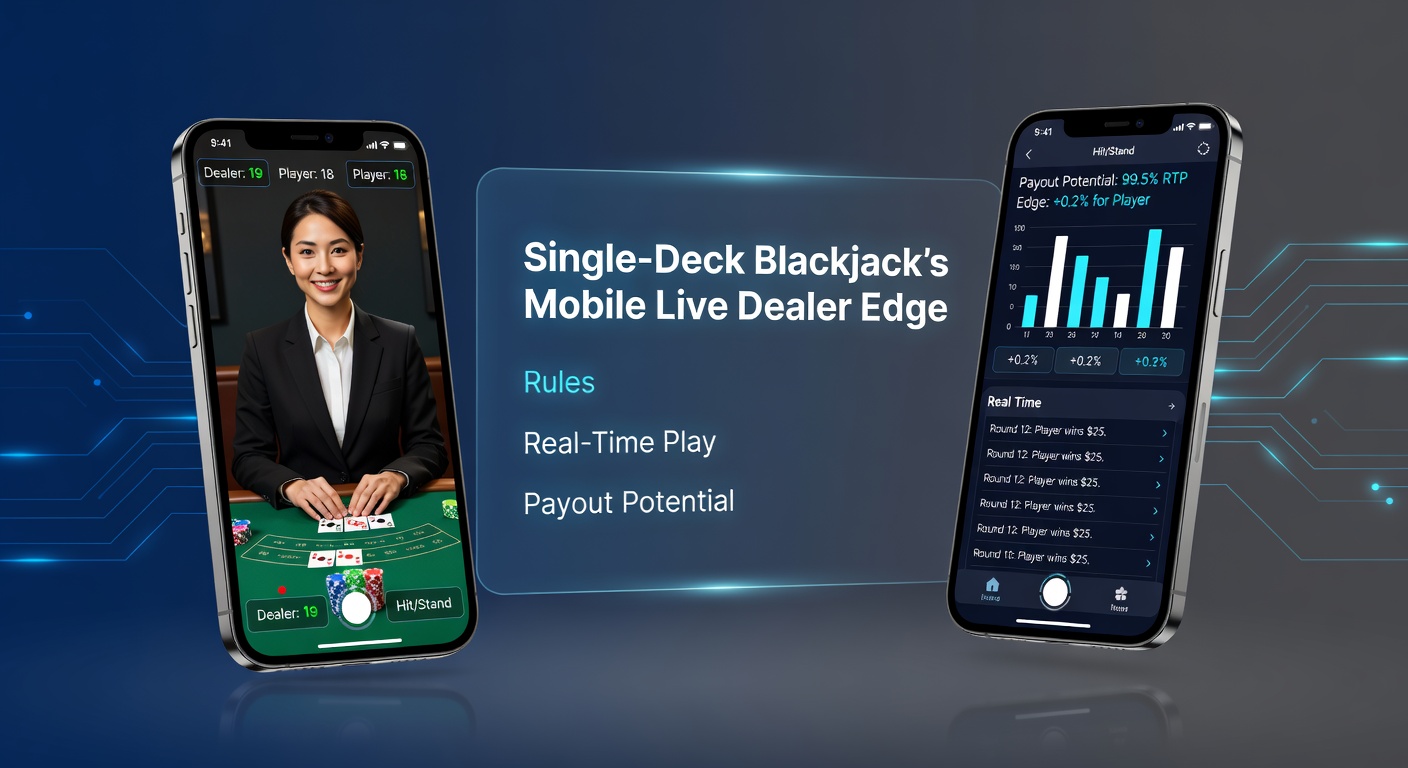
Live dealer single-deck blackjack on mobile apps brings the casino floor to smartphones and tablets through high-definition streams from professional studios, where real dealers shuffle physical decks in real time, eliminating the randomness concerns some associate with RNG software. Players tap to place bets, hit, stand, double down, or split right from their screens, and the technology—often powered by optical character recognition (OCR) to read cards instantly—ensures transparency since viewers watch every shuffle and deal unfold. What's interesting is how this format cuts out multi-deck shoe complexities, making card counting more feasible for skilled players, although casinos counter with frequent shuffles after each round in single-deck play.
Platforms like those licensed in various jurisdictions stream from locations in Malta or the Philippines, adapting to mobile screens with intuitive interfaces that resize tables seamlessly whether on iOS or Android devices; lag stays minimal thanks to 5G advancements by April 2026, so rounds flow at 30-50 hands per hour, comparable to land-based tables. Observers note that the social chat features let players interact with dealers and others, adding a layer of engagement absent in solo digital games, while side bets like Perfect Pairs or 21+3 pop up occasionally but carry higher house edges around 6-13% according to industry analyses.
Real-Time Play Dynamics on Mobile Devices
Real-time play in mobile live dealer single-deck blackjack unfolds with a seven-to-ten-second window per decision after the deal, where players select actions via touch controls that send signals to the studio floor; dealers then respond immediately, dealing physical cards that cameras capture and broadcast back without delay. This back-and-forth creates a rhythm akin to physical casinos, but with pauses for bet placement at round starts, and automatic shuffles reset the deck fully each time, preventing running counts from building up over multiple hands. Turns out, the single-deck nature speeds things up since no shoe penetration issues arise, allowing for quicker resolutions especially when players stand early or bust on stiff hands like 12-16 against a dealer's strong upcard.
Multi-table functionality lets users join several games simultaneously from one app, switching views effortlessly, while features like bet-behind—where late joiners wager on seated players' hands—keep action constant even if tables fill up; data from the Alcohol and Gaming Commission of Ontario reveals that such innovations boosted live dealer participation by 25% in regulated markets over the past year. And for those tuning in during peak hours, HD slow-motion replays of key moments help verify fairness, with every session logged for audit trails that regulators review periodically.
Unlocking Payout Potential in Single-Deck Variants
Payout potential shines brightest in single-deck blackjack because the reduced deck size increases the frequency of player-favorable situations like dealer busts on 12-16 when showing 2-6, leading to win rates around 42-44% for basic strategy adherents, while pushes occur about 8-9% of the time. A standard 3:2 blackjack payout nets $15 on a $10 bet, but double-down wins double that stake, and splits on aces or 8s can multiply returns further if charts guide the plays; figures from university studies, such as those at the University of Nevada, indicate that perfect basic strategy yields an RTP of 99.83%, edging out multi-deck games by 0.4-0.7%. Side bets tempt with higher volatility though, like Dragon Bonus paying up to 25:1 for suited 7-card 21s, but their 5-10% house edges make them long-term losers despite occasional windfalls.
Now, progressive jackpots linked to single-deck tables offer escalating pots funded by small contributions per hand, sometimes hitting six figures as seen in reports from Australian gaming bodies, yet contribution rates of 1-2% per bet effectively hike the base house edge. Players who've tracked sessions find that betting spreads from $1 minimums to $500 maximums across mobile tables allow bankroll management tailored to risk levels, and cashback promotions on losses—common in April 2026 apps—can push effective RTP over 100% for qualifying volumes. It's noteworthy that variance swings wildly short-term, with streaks of 10+ losses possible even under optimal play, but over thousands of hands, the math evens out toward those slim edges.
Navigating Rules Variations and Platform Specifics
Rule tweaks across mobile live dealer sites create subtle edges; for instance, late surrender combined with dealer hits soft 17 boosts player RTP by 0.1%, while re-splitting up to four hands adds another 0.05-0.1%, as detailed in gaming math resources. Platforms often cap doubles on 9-11 only or restrict them post-split, so checking table rules before sitting down becomes crucial, and those who do report better outcomes from avoiding unfavorable variants. But here's where it gets interesting: some studios as of April 2026 introduce conditional rules like player 22 ties instead of busts, mimicking fun 21 variants but preserving near-standard odds.
Take one case where a New Jersey-licensed operator rolled out single-deck tables with 3:2 payouts and stand-on-all-17 rules, drawing record mobile traffic because the setup mirrored classic Vegas play; observers tracked a 15% uptick in session lengths as players chased the authenticity. Yet, minimum bet requirements vary from $5 on premium streams to $1 on standard ones, influencing accessibility, and VIP tables unlock higher limits plus dedicated dealers for high rollers.
Conclusion
Single-deck blackjack's mobile live dealer format combines tight rules, seamless real-time interaction, and superior payout math into a package that keeps players coming back, especially with tech upgrades smoothing the experience by April 2026. Data consistently shows the lowest house edges emerge from disciplined strategy use amid transparent streams, while the single-deck purity delivers faster, fairer play without the dilution of multiple shoes. Those engaging thoughtfully uncover not just entertainment but a rare casino game where the edge tilts ever so slightly toward skill and patience over pure chance.