Rating Frameworks Directing Payment Selection for Live Dealer Mobile Sessions
Hugo Schröder · Jul 15, 2026

Rating Frameworks Directing Payment Selection for Live Dealer Mobile Sessions
Rating frameworks evaluate payment methods according to security protocols, transaction speed, fee structures, and mobile compatibility when users access live dealer experiences. These systems draw on standardized metrics that operators and regulators apply across platforms, allowing consistent comparisons between options such as e-wallets, bank transfers, and card-based solutions. Data from regulatory filings shows that frameworks prioritize encryption standards and real-time verification processes that align with live table game requirements on wireless networks.
Core Components of Established Frameworks
Frameworks assess payment providers through weighted categories that include authentication layers, dispute resolution timelines, and integration with mobile operating systems. Observers note that certification pathways often reference independent testing laboratories that verify compliance with payment card industry standards and regional licensing rules. In practice, these evaluations produce numerical scores that guide selection for sessions involving real-time dealer interactions, where delays in fund movement can interrupt gameplay flow.
Studies from industry research groups indicate that mobile-specific criteria receive higher weighting because device variability affects connection stability during card or roulette rounds. Metrics track average authorization times under varying network conditions, while also recording failure rates that occur when users switch between Wi-Fi and cellular data. Such measurements become particularly relevant in July 2026, when several multi-state operators reported updates to their compliance documentation following new audit cycles.
Security and Verification Benchmarks
Security evaluations within these frameworks examine multi-factor authentication requirements and tokenization methods that protect account details during live sessions. Researchers have documented how frameworks incorporate breach incident histories from payment processors, assigning lower ratings to providers with repeated vulnerabilities. Verification benchmarks further measure the duration required for identity confirmation, which directly influences how quickly players can join dealer-hosted tables on mobile devices.
According to data released by the Massachusetts Gaming Commission, frameworks that integrate biometric options alongside traditional checks demonstrate improved retention rates in mobile environments. These benchmarks also account for cross-border transaction rules that apply when users access international live dealer studios from domestic networks.
Transaction Efficiency and Cost Analysis
Cost structures receive systematic review through frameworks that calculate total fees across deposit and withdrawal cycles typical of live dealer play. Efficiency scores reflect processing speeds during peak hours, when multiple table sessions generate simultaneous transactions. Figures from Canadian regulatory summaries reveal that e-wallet options frequently receive top marks for sub-minute authorizations, whereas certain bank transfer methods incur delays that exceed framework thresholds for mobile suitability.
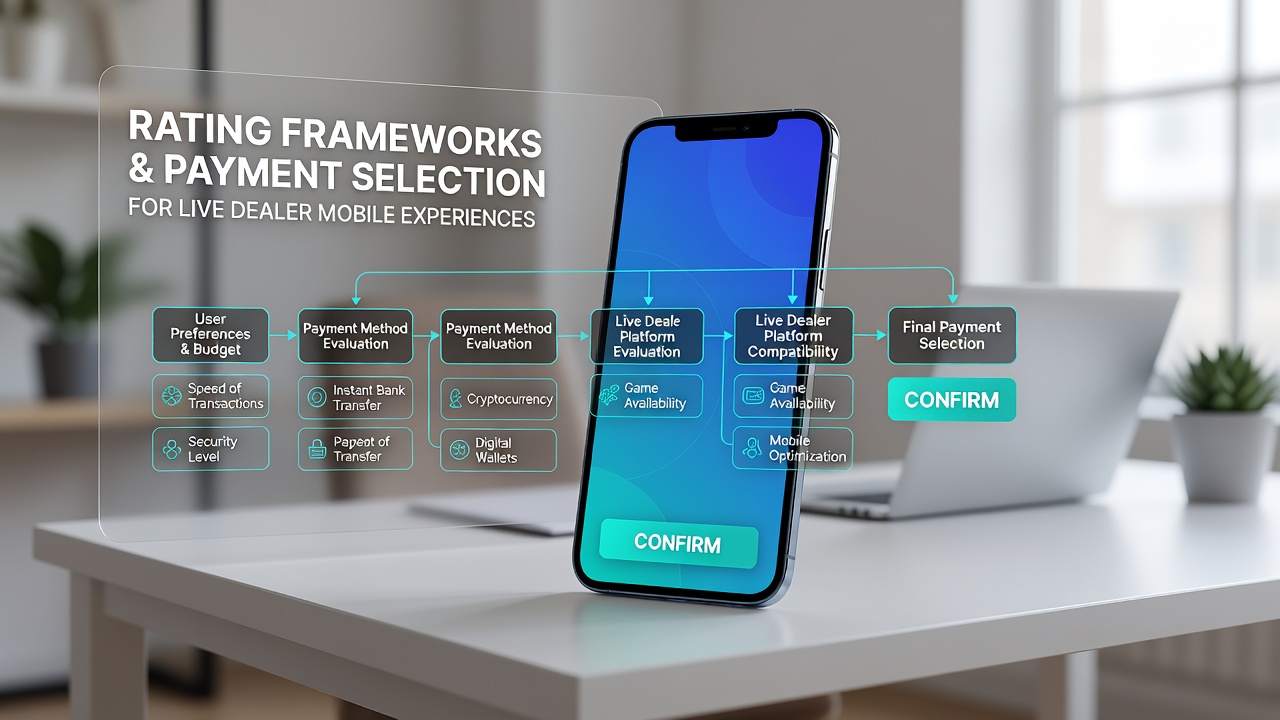
Analysts observe that frameworks adjust weightings seasonally to reflect changes in processor policies, ensuring that ratings remain current as new mobile applications enter the market. This adjustment process incorporates user-reported incident data collected through operator feedback channels, which then informs revisions to scoring algorithms.
Regulatory Alignment and Geographic Variations
Regional licensing bodies apply distinct overlays to core frameworks, adding requirements tied to local consumer protection statutes. In jurisdictions such as New Jersey and Ontario, evaluations emphasize audit trails that document fund movements during interactive card sessions on wireless networks. These additional layers create differentiated rating outcomes depending on the player's location and the operator's licensed markets.
Reports compiled by the European Gaming and Betting Association highlight how frameworks accommodate varying tax treatments on winnings, which can influence net payout calculations within the rating model. Observers note that providers maintaining consistent compliance across multiple regions tend to achieve higher composite scores, supporting broader accessibility for mobile live dealer participants.
Conclusion
Rating frameworks continue to shape payment selection by supplying structured comparisons that account for technical, financial, and regulatory dimensions relevant to mobile live dealer environments. Ongoing refinements incorporate new data points from operational reports and certification updates, maintaining relevance as device capabilities and network standards evolve through 2026 and beyond.